


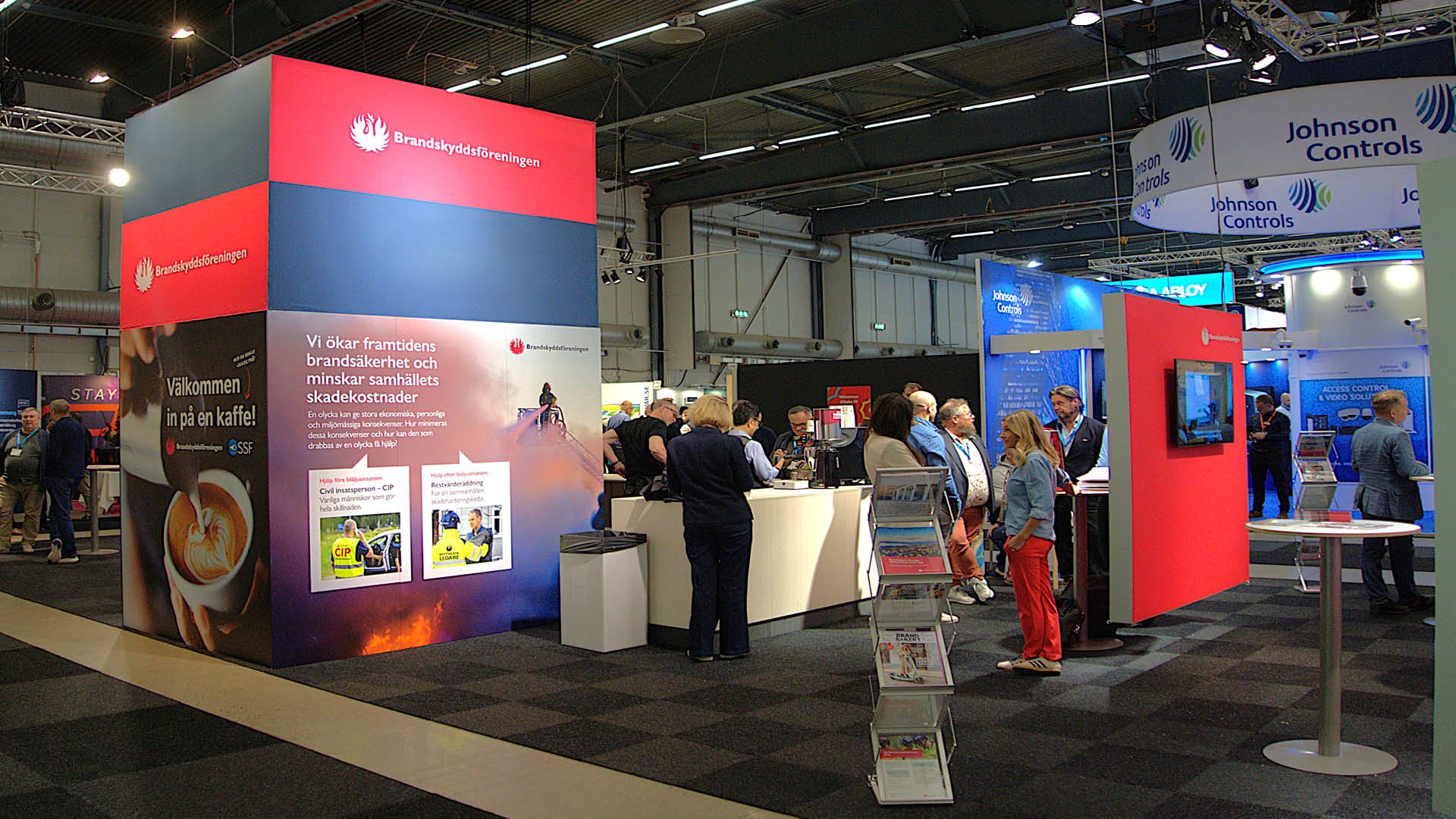
Fire safety is about far more than extinguishing fires. For Brandskyddsföreningen (the Swedish Fire Protection Association), the mission is to help build a safer, more resilient, and sustainable Sweden through everything from prevention and public education to recovery and support when accidents occur.
“We are a non-profit public-benefit organisation that has been around for more than 100 years. Our mission is to help create a safer, more resilient, and sustainable Sweden,” says Secretary General Mats Björs.
Brandskyddsföreningen operates as an independent public-interest organisation, bringing together stakeholders from industry, the public sector, academia, and the fire and rescue services. Through research, training, standards development, and knowledge sharing, the organisation works to strengthen fire safety across society.
“The risk landscape is constantly evolving, and right now the pace of change is particularly rapid. That is why we need to both serve as a source of knowledge and identify emerging risks while helping to drive progress. An important part of our role is to build bridges between different stakeholders so that we can address the security challenges of the future.”
From Prevention to Recovery
At SKYDD, Brandskyddsföreningen will highlight three key areas: standards and regulations, salvage and recovery services (RVR), and Civilian Emergency Responders (CIP).
According to Mats Björs, together they form a coherent chain of measures that supports a robust approach to fire safety.
“Standards and regulations are one of the cornerstones of our work. They provide the foundation for preventive fire safety by translating legislative requirements into practical application.”
Regulations are often developed on behalf of the insurance industry and serve as an important complement to regulatory requirements set by public authorities.
“Laws do not always regulate every detail. This is where our standards play an important role by providing clarity and guidance for those working with fire safety in practice.”
Even the best preventive work cannot eliminate all risks. When a fire occurs, salvage and recovery operations become crucial in limiting the consequences.
“Salvage and recovery operations have been in place since 1976 and are celebrating their 50th anniversary this year. The work focuses on reducing damage after a fire and helping people and organisations recover more quickly.”
The work has evolved over time. From primarily focusing on limiting material damage, it now also includes support for people and organisations that need to recover after a serious incident.
“It is about mitigating the consequences, both in human and economic terms.”
The third part of the chain is the Civilian Emergency Responders (CIP) initiative, which the Swedish Fire Protection Association has developed in recent years.
“The idea is simple: someone should be able to reach the incident scene faster. We train, equip, and alert volunteers via SOS Alarm so that an initial response can begin before the emergency services arrive.”
The vision is ambitious. The long-term goal is to build a network of 75,000 civilian emergency responders across the country.
“The more people who take part, the greater the likelihood that someone is nearby when an incident occurs. This strengthens societal resilience and can make a significant difference during the critical first minutes.”
Regulations must work in practice
For regulations to be effective, they must not only be correct but also understandable and practical to use.
“Regulations should create safety, not uncertainty. That is why we place great emphasis on making them practically applicable.”
An important part of the work is involving a wide range of perspectives in the development process.
“We bring together authorities, property owners, consultants, contractors, and end users around the same table. When different stakeholders understand each other’s realities, regulations become both clearer and more effective.”
In addition to the standards themselves, the Swedish Fire Protection Association works with training, guidance, and knowledge sharing to ensure that expertise is put into practice.
“We aim to be a meeting place where different perspectives can come together and evolve.”
Data-driven fire safety and emerging risks
When Mats Björs looks ahead, he sees fire safety work becoming increasingly integrated, knowledge-based, and data-driven.
“AI and digitalisation will open up entirely new opportunities to identify risks and work preventively.”
Brandskyddsföreningen already collects large amounts of data today, including fire statistics, information from insurance companies, and data from its own salvage and recovery operations
“The more we know about why fires occur and what consequences they lead to, the better we can prevent them.”
At the same time, the risk landscape is changing rapidly. Electrification, energy storage, solar installations, and new construction methods are creating new challenges for society as a whole.
“We are talking about battery storage systems, solar panels, and timber buildings. These are positive developments, but they also place higher demands on knowledge and fire safety.”
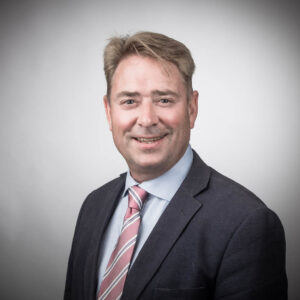
Mats Björs, Secretary General Brandskyddsföreningen
Fire safety must become an integral part of sustainability work
A recurring theme in Mats Björs’ remarks during the interview is the link between sustainability and fire safety. He argues that fire safety is still too often treated as a separate issue, even though it should be an integral part of sustainability work.
“We cannot build sustainable societies without also taking safety and fire protection into account.”
He notes, among other things, that many sustainability and environmental certifications focus on energy, climate, and material choices, but do not sufficiently address fire safety.
“If a building burns down, it affects people, the economy, and the environment. That is why fire safety must be a natural part of the sustainability discussion.”
The same reasoning applies when the lifespan of buildings is extended.
“The longer a building remains in use, the better it is from a sustainability perspective. At the same time, the likelihood that it will at some point be affected by a fire increases. That is why fire safety must be considered throughout the entire lifecycle of a building.”
That is why Skydd is an important meeting place
Brandskyddsföreningen participating in Skydd is a natural part of its mission.
“Development often takes place in the meeting between people.”
At the exhibition, decision-makers, experts, suppliers, authorities, and end users from across the security sector come together.
“There, we can listen, learn, and understand the challenges our members and partners are facing, while also sharing our knowledge and discussing solutions.”
According to Mats Björs, the best ideas often emerge when different areas of expertise come together.
“Many people find fire safety to be complex. But often it comes down to the right expertise not being involved early enough in the process. When different perspectives come together, the solutions are almost always better.”
Proud to bring people together in the service of society
When Mats Björs is asked what he is most proud of in the organisation’s work, he does not hesitate.
“I am proud that we continue, even after more than a hundred years, to be a unifying force for fire safety in Sweden.”
He particularly highlights the ability to combine experience with development.
“We must constantly remain curious about the future. Otherwise, we risk becoming irrelevant.”
He is particularly proud of the development of salvage and recovery operations and the initiative on civilian emergency responders.
“Salvage and recovery operations provide tremendous value for people affected by fires. At the same time, we are now building something entirely new with civilian emergency responders, which can strengthen societal resilience in a very tangible way.”
No one can solve the challenges of the future alone
If he is to leave a message for everyone working in fire safety, it comes down to three things: curiosity, collaboration, and risk awareness.
“We need to get better at understanding risks before something happens.”
He argues that both individuals and organisations have a responsibility to work preventively. For individuals, this means basic fire safety at home, while companies and organisations need to ensure that fire safety is integrated into the management and governance of their operations.
“Fire safety is not only about protecting buildings and property. It is about protecting people, operations, and essential societal values.”
His conclusion is clear: “If we become better at managing risks together, we can create a safer, more sustainable, and more resilient society for future generations.”